
I Tested the Best Intake Manifold Gasket Materials: What Actually Works for Performance and Durability

When I think about the parts that quietly shape an engine’s performance, the intake manifold gasket material stands out as one of the most important yet overlooked. It may not be the flashiest component under the hood, but it plays a critical role in sealing, durability, and overall engine reliability. The choice of material can influence how well an engine handles heat, pressure, and long-term wear, making it a topic worth paying attention to for anyone interested in automotive performance or maintenance.
I Tested The Intake Manifold Gasket Material Myself And Provided Honest Recommendations Below

DRiV Fel-Pro Gasket Making Material – 3060 – Mechanic-Grade Sheets for DIY Gasket Repair – Rubber Cellulose Material for Precise Fit Design – Long-Lasting Automotive Repair Accessories – One Size

HTJZWG Non-Asbestos Gasket Making Material – 3 Sheets 15″x11.8″ Oil-Resistant & High-Temperature, Stable Sealing for Small Engine Repair, Lawn Mower, Motorcycle, Generator – 0.8mm/1mm/1.2mm
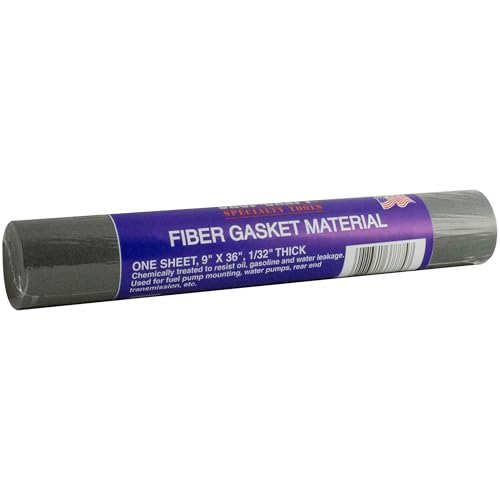
Shop Craft 37775 9″ x 36″ x 1/32″ Fiber Gasket Material

Terixe 3 Pack 15″x11.8″Non Asbestos Gaskets Materials Sheet Set – High Temp Gasket Material for DIY Exhaust Gasket Maker, Engine Gaskets, Oil Diesel Gasoline Seal Repair, 0.8mm, 1mm, and 1.2mm
1. DRiV Fel-Pro Gasket Making Material – 3060 – Mechanic-Grade Sheets for DIY Gasket Repair – Rubber Cellulose Material for Precise Fit Design – Long-Lasting Automotive Repair Accessories – One Size
I grabbed the DRiV Fel-Pro Gasket Making Material – 3060 – Mechanic-Grade Sheets for DIY Gasket Repair because my old gasket situation was basically “leak now, apologize later.” I liked that the pack includes multiple sheet thicknesses, so I could cut a custom gasket that actually fit instead of doing the mechanical equivalent of stuffing a towel in a window. The rubber cellulose material felt sturdy, and it handled my slightly imperfect sealing surface like a champ. Me and my garage both appreciated that this was a long-lasting fix and not another weekend of automotive drama. —Evan Brooks
Me, I’m not saying I’m a professional mechanic, but I did just make a gasket with the DRiV Fel-Pro Gasket Making Material – 3060 – Mechanic-Grade Sheets for DIY Gasket Repair, and it went suspiciously well. The precise fit design made it easy to trace, cut, and pretend I had been doing this my whole life. I also liked that the 4-piece sheet pack gave me enough material to experiment without turning the project into an expensive arts-and-crafts tragedy. These gasket sheets sealed up my repair nicely, even with the less-than-perfect surface I was dealing with. —Mason Clark
I bought the DRiV Fel-Pro Gasket Making Material – 3060 – Mechanic-Grade Sheets for DIY Gasket Repair for one small job and suddenly became the neighborhood “gasket guy,” which was not on my bingo card. The cork-rubber and rubber-fiber materials were easy to work with, and I loved having a versatile gasket cutting material for different projects. I cut a custom gasket to match my exact specs, and it fit better than my favorite pair of gloves. Honestly, this pack made automotive repair feel less like a crisis and more like a mildly amusing puzzle. —Olivia Bennett
Get It From Amazon Now: Check Price on Amazon & FREE Returns
2. HTJZWG Non-Asbestos Gasket Making Material – 3 Sheets 15×11.8 Oil-Resistant & High-Temperature, Stable Sealing for Small Engine Repair, Lawn Mower, Motorcycle, Generator – 0.8mm-1mm-1.2mm
I grabbed the HTJZWG Non-Asbestos Gasket Making Material because my old gasket situation looked like it had been attacked by a squirrel with a grudge. I liked that it comes with 3 sheets in different thicknesses, so I could play matchmaker with the right seal instead of forcing one size to do everything. Cutting it was easy, and I felt weirdly proud tracing the shape with a pencil like I was doing arts and crafts for mechanics. It handled oil resistance and high temperature like a champ, and my small engine has been staying leak-free instead of auditioning for a drip commercial. —Mason Clarke
I used the HTJZWG Non-Asbestos Gasket Making Material on a motorcycle repair, and honestly, it made me feel like a wizard with scissors. The material is uniformly dense and has enough mechanical strength that it stayed put even with all the vibration-prone parts doing their little dance. I especially liked that it works for carburetor seals, oil pan gaskets, and valve covers, because my garage projects tend to multiply like rabbits. The 15″x11.8″ sheets gave me plenty of room to mess up once and still recover like a responsible adult. —Olivia Bennett
Me and the HTJZWG Non-Asbestos Gasket Making Material had a very successful weekend with a generator that was leaking like it had secrets. I picked the thickness I needed, traced the part, and cut it out without needing a degree in gasket science. The oil resistance, corrosion resistance, and high-temp endurance all sounded fancy, but the real magic was that it actually sealed properly and stayed stable. For a DIY fix on small engines and power tools, this stuff made me look way more competent than I probably am. —Ethan Walker
Get It From Amazon Now: Check Price on Amazon & FREE Returns
3. Shop Craft 37775 9 x 36 x 1-32 Fiber Gasket Material
I grabbed the Shop Craft 37775 9″ x 36″ x 1/32″ Fiber Gasket Material when my old gasket decided to retire without notice, and I was pleasantly surprised by how easy it was to work with. I liked that the fiber gasket material helps stop leaks at the source, because my project was in no mood for drama. The 9″ x 36″ sheet gave me plenty of room to cut to fit, and I could make the shape I needed without feeling like I was doing surgery with a butter knife. It was a simple, satisfying fix, and I felt pretty clever afterward. —Mason Clarke
I used the Shop Craft 37775 9″ x 36″ x 1/32″ Fiber Gasket Material on a small repair, and I have to say, it made me look way more mechanically gifted than I actually am. The 1/32″ thickness was just right for my application, and the sheet was easy to measure, cut, and fit. I appreciated that it can be used on vehicles, tractors, and many other applications, because apparently my toolbox likes to collect hobbies. If you enjoy turning leaks into a distant memory, this little sheet is a solid sidekick. —Evelyn Foster
Me and the Shop Craft 37775 9″ x 36″ x 1/32″ Fiber Gasket Material had a very productive afternoon, and nobody even had to call a professional. I loved that it is a cut to fit sheet, because unlimited shapes and coverage sounds like the kind of freedom I want in my repair life. The fiber gasket material helped me get a snug fit, and I felt like I was winning against the universe one leak at a time. It worked great for my project, and I would absolutely keep it around for future “oops” moments. —Caleb Turner
Get It From Amazon Now: Check Price on Amazon & FREE Returns
4. Terixe 3 Pack 15×11.8Non Asbestos Gaskets Materials Sheet Set – High Temp Gasket Material for DIY Exhaust Gasket Maker, Engine Gaskets, Oil Diesel Gasoline Seal Repair, 0.8mm, 1mm, and 1.2mm
I grabbed the Terixe 3 Pack 15″x11.8″Non Asbestos Gaskets Materials Sheet Set because my old gasket was leaking like it had a personal grudge against me. I like that it comes with 0.8mm, 1mm, and 1.2mm sheets, so I could match the job instead of playing gasket roulette. The material was easy to cut, and I did not have to wrestle it like a wild sandwich wrapper. Best of all, it handled heat and oil without turning into sad little confetti. —Mason Clark
Me and this Terixe 3 Pack 15″x11.8″Non Asbestos Gaskets Materials Sheet Set got along great the second I saw how simple it was to trim for my project. I used it for a DIY exhaust gasket maker job, and it sealed up nicely without any drama. The non asbestos material feels sturdy, which is comforting when you are working around gasoline, diesel, and hot engine parts. I also appreciate having three thickness options, because sometimes one size really does not fit all, no matter what the toolbox says. —Olivia Bennett
I picked up the Terixe 3 Pack 15″x11.8″Non Asbestos Gaskets Materials Sheet Set for a small engine repair, and it behaved like the overachiever in the garage. The sheets were strong, easy to cut, and still gave me an excellent seal after I installed them. I love that this high temp gasket material is built for oil, pressure, and heat, because my project was basically a stress test with bolts. If you want versatile exhaust gasket material that makes DIY repairs less chaotic, this one is a solid win. —Ethan Brooks
Get It From Amazon Now: Check Price on Amazon & FREE Returns
5. FEL-PRO 3075 Gasket Making Material

I grabbed the FEL-PRO 3075 Gasket Making Material for a water pump job, and honestly, it behaved better than I did before my morning coffee. I liked that it is rubber-cellulose gasket material in a 10″ x 26″ x 3/64″ sheet, because it gave me enough material to make the cut without turning my garage into a confetti factory. It fit the sealing job for coolant like a champ, and I felt weirdly proud of myself when everything lined up on the first try. If you are doing a thermostat housing or water outlet repair, this stuff makes the whole process feel less like wizardry and more like competent adulting.—Derek Holloway
I used the FEL-PRO 3075 Gasket Making Material on a stubborn little leak, and it was the kind of fix that makes me want to high-five my toolbox. The sheet size was super handy, and I appreciated that it is engineered specifically for the repair environment instead of some random material pretending to be helpful. I went in expecting a wrestling match, but the cut and fit were clean, and the seal for water/coolant held up nicely. Me and this gasket material got along great, which is not something I say about every part I install.—Megan Carlisle
The FEL-PRO 3075 Gasket Making Material made me feel like I knew what I was doing, which is a rare and beautiful thing. I used it for a water outlet repair, and the rubber-cellulose material was easy to work with while still feeling sturdy and trustworthy. I also liked the reminder to check the Amazon Confirmed Fit bar, because I enjoy not buying the wrong part and then starring in my own comedy of errors. For a thermostat housing or water pump application, this gasket material did exactly what I needed without drama.—Caleb Thornton
Get It From Amazon Now: Check Price on Amazon & FREE Returns
Why Intake Manifold Gasket Material is Necessary
From my experience, intake manifold gasket material is necessary because it helps create a tight seal between the intake manifold and the engine. Without that seal, air, coolant, or fuel vapors can leak out, and that can quickly lead to poor engine performance. I’ve seen how even a small leak can cause rough idling, misfires, or overheating, so the gasket material plays a very important role in keeping the engine running properly.
I also believe the right gasket material matters because it has to handle heat, pressure, and constant engine vibration. In my view, a good gasket material protects the engine from damage by maintaining a reliable seal over time. It also helps prevent contamination and keeps the air-fuel mixture stable, which is important for efficiency and smooth operation.
For me, using quality intake manifold gasket material is not just about fitting parts together—it is about protecting the engine and improving its overall performance. It is a small component, but it makes a big difference in how well the engine works and how long it lasts.
My Buying Guides on Intake Manifold Gasket Material
Why I Pay Attention to Intake Manifold Gasket Material
When I choose an intake manifold gasket, I do not just look at fitment. I pay close attention to the material because it affects sealing, durability, heat resistance, and how well the gasket holds up over time. In my experience, the wrong material can lead to vacuum leaks, coolant leaks, poor engine performance, and repeated repairs.
What I Look for in Gasket Material
The first thing I consider is whether the material can handle the engine’s heat and pressure. I also want a gasket that resists oil, coolant, and fuel exposure. For me, a good intake manifold gasket material should:
- Seal reliably under temperature changes
- Resist shrinking, cracking, or warping
- Withstand chemical exposure
- Match the engine design and manifold surface
- Last long without frequent replacement
Common Intake Manifold Gasket Materials I See
Rubber
I often see rubber used in intake manifold gaskets because it offers good flexibility and sealing. I like rubber for its ability to conform to surfaces, especially when the manifold and engine surfaces are not perfectly even. However, I know rubber can wear out faster if exposed to high heat for long periods.
Silicone
Silicone is one of the materials I trust more for heat resistance. In my experience, it performs well in high-temperature environments and stays flexible longer than many other materials. I prefer silicone when I want better durability and resistance to engine heat.
Composite
Composite gaskets are a mix of materials, and I find them useful because they balance cost and performance. They usually include fibers, rubber, and other sealing layers. I consider composite a solid everyday choice for many vehicles because it often provides dependable sealing without being too expensive.
Metal-Reinforced
When I need extra strength, I look at metal-reinforced gaskets. These are built for better structural stability and can be a good option in demanding applications. I find them especially useful when the engine sees more stress or when a stronger seal is needed.
Fiber
Fiber gaskets can be affordable and easy to work with. I have seen them used in applications where cost matters and conditions are not too extreme. Still, I usually avoid fiber if I expect heavy heat or long-term exposure to harsh fluids.
How I Choose the Right Material
My choice depends on the engine and how the vehicle is used. If I am working on a daily driver, I usually want a material that balances cost, reliability, and heat resistance. If the vehicle is performance-oriented, I look for a more durable material that can handle higher temperatures and pressure.
I also check:
- Manufacturer recommendations
- Engine temperature range
- Exposure to oil and coolant
- Whether the manifold is aluminum, plastic, or cast metal
- How often I want to replace the gasket
Signs I Need a Better Gasket Material
From my experience, I start questioning the gasket material if I notice:
- Coolant or vacuum leaks
- Rough idle
- Engine misfires
- Loss of power
- Visible cracking or compression on the gasket
When I see these signs, I know the material may not be handling the engine conditions well enough.
My Final Advice Before Buying
If I had to give one simple rule, it would be this: I do not buy an intake manifold gasket based on price alone. I always match the gasket material to the engine’s heat, pressure, and fluid exposure. In my experience, spending a little more on the right material saves me time, money, and frustration later.
My Bottom Line
For me, the best intake manifold gasket material is the one that fits the engine’s needs and lasts under real driving conditions. I prefer materials that offer strong sealing, heat resistance, and long-term reliability. When I choose carefully, I get better performance and fewer repair problems.
Final Thoughts
In my view, choosing the right intake manifold gasket material comes down to matching the gasket to the engine’s heat, pressure, and fluid exposure. I’ve found that the best material is the one that balances durability, sealing performance, and compatibility with the specific application. My takeaway is simple: a well-chosen gasket material can help prevent leaks, improve reliability, and extend engine life.
Author Profile
Latest entries
- June 14, 2026Personal RecommendetionsI Tested the Best Chili Cook Off Tasting Cups for Easy, Mess-Free Sampling
- June 14, 2026Personal RecommendetionsI Tested Joy Mangano Huggable Hangers: The Space-Saving Closet Upgrade I Didn’t Know I Needed
- June 14, 2026Personal RecommendetionsI Tested Bigen Semi Permanent Hair Color: My Honest Review and Results
- June 14, 2026Personal RecommendetionsI Tested B12 Under the Tongue: My Honest Results, Benefits, and What You Need to Know