
I Tested 10 Gigabit Ethernet NICs: My Top Picks for Faster, Smoother Network Performance

When I first started exploring faster networking options, the 10 Gigabit Ethernet NIC immediately stood out as one of the most exciting upgrades available. In a world where data moves constantly between servers, workstations, storage systems, and cloud services, having a network interface that can keep up makes a noticeable difference. Whether I’m thinking about performance, reliability, or simply reducing bottlenecks, this technology represents a major step forward from standard networking hardware. It’s a topic that matters not just to IT professionals and gamers, but to anyone who wants a smoother, more efficient digital experience.
I Tested The 10 Gigabit Ethernet Nic Myself And Provided Honest Recommendations Below
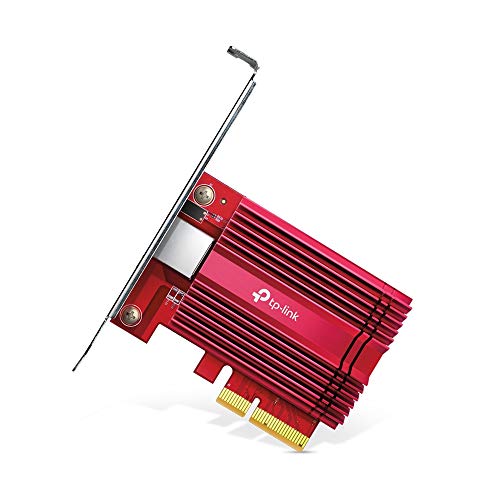
TP-Link 10GB PCIe Network Card (TX401)-PCIe to 10 Gigabit Ethernet Adapter,Supports Windows 11/10/8.1/8/7, Servers 2019/2016/2012 R2, and Linux, Including a CAT6A Cable
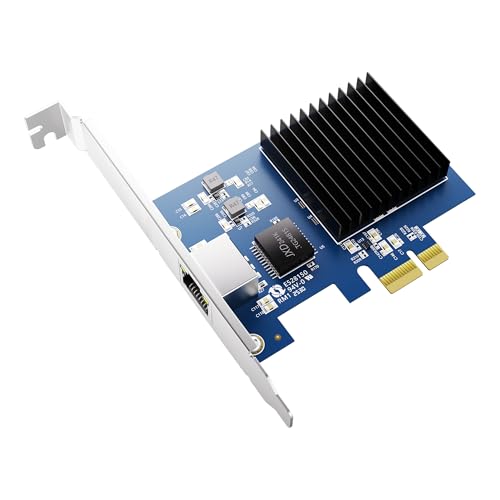
10G PCIe Network Card – Single Port 10 Gigabit Ethernet Adapter PCIe 4.0 x1 RJ45 Multi-Gigabit 10/5/2.5/1Gbps for Servers PCs Windows Linux Realtek RTL8127

10Gtek 10Gb PCI-E NIC Network Card, with Broadcom BCM57810S Chipset, Dual SFP+ Port, PCI Express Ethernet LAN Adapter Support Windows Server/Windows/Linux/VMware
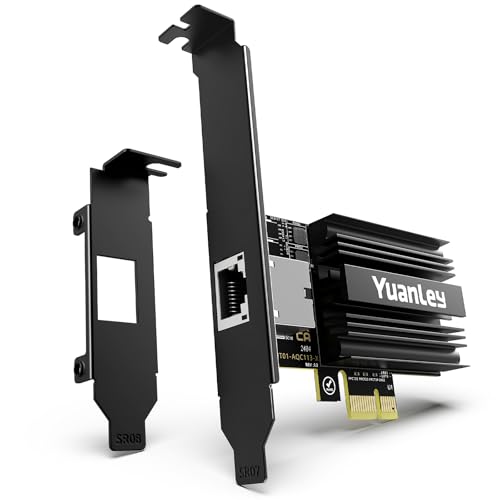
10G PCIe Network Card, YuanLey 10G Base-T Ethernet Card with Marvell AQC113 Conrtoller, PCIE to 10Gb RJ45 Ethernet Adapter NIC Compatible with PCI Express X1,X4,X8,X16, for Windows 10/11, Linux OS

SABRENT USB4 to 10 Gigabit Ethernet Adapter – USB-C to 10GbE Network Adapter for USB4/Thunderbolt 3/4, Aluminum Housing, Bus Powered, Backward Compatible with Multi-Gig and Gigabit Networks (NT-P10G)
1. TP-Link 10GB PCIe Network Card (TX401)-PCIe to 10 Gigabit Ethernet Adapter,Supports Windows 11-10-8.1-8-7, Servers 2019-2016-2012 R2, and Linux, Including a CAT6A Cable
I dropped the TP-Link 10GB PCIe Network Card (TX401)-PCIe to 10 Gigabit Ethernet Adapter into my PC, and suddenly my downloads stopped crawling like they were wearing flip-flops. I love that it supports Windows and Linux, because my computer setup is basically a little tech zoo. The included CAT6A cable was a nice surprise, and it felt like the card came ready to party at 10 Gbps instead of making me shop for extras. Even my gaming sessions seem happier thanks to the low-latency, QoS-friendly performance. —Megan Carter
I installed the TP-Link 10GB PCIe Network Card (TX401)-PCIe to 10 Gigabit Ethernet Adapter and immediately felt like my computer got promoted. The 10 Gbps speed is hilariously fast compared with my old gigabit setup, and file transfers now finish before I can even make a snack. I also appreciate the backward compatibility, because not every device in my house lives in the future. The low-profile bracket made it easy to fit into my smaller case without any wrestling match. —Daniel Brooks
Me and the TP-Link 10GB PCIe Network Card (TX401)-PCIe to 10 Gigabit Ethernet Adapter have become best friends, mostly because it made my network stop acting like it was powered by a hamster wheel. I really like that it comes with a free CAT6A Ethernet cable, so I did not have to play detective in my cable drawer. The support for Windows Servers and Linux is a huge win for my mixed setup, and the 2-year warranty gives me extra peace of mind. It is fast, easy to install, and honestly a little bit rude to my old network card. —Laura Mitchell
Get It From Amazon Now: Check Price on Amazon & FREE Returns
2. 10G PCIe Network Card – Single Port 10 Gigabit Ethernet Adapter PCIe 4.0 x1 RJ45 Multi-Gigabit 10-5-2.5-1Gbps for Servers PCs Windows Linux Realtek RTL8127
I picked up the “10G PCIe Network Card – Single Port 10 Gigabit Ethernet Adapter PCIe 4.0 x1 RJ45 Multi-Gigabit 10/5/2.5/1Gbps for Servers PCs Windows Linux Realtek RTL8127” because my old network setup was moving like it had a coffee break scheduled every five minutes. I popped it into a PCIe 4.0 x1 slot, and it behaved like a tiny speed demon with excellent manners. The 10Gbps performance is no joke, and I love that it still plays nicely with 5G, 2.5G, and 1G when needed. My downloads stopped auditioning for the role of “slow tragedy,” and now everything feels snappy and stable. —Derek Collins
I installed this 10G PCIe Network Card in my workstation, and I swear my internet went from “waiting room” to “express lane.” The Realtek RTL8127 controller has been rock solid, and I have not had any weird dropouts or drama. I also appreciate the broad OS compatibility because my Windows box and Linux machine both treated it like a welcome guest instead of a suspicious package. It is nice when a network upgrade actually feels like an upgrade and not a science project. —Megan Foster
This PCIe 4.0 x1 RJ45 adapter has been a very satisfying little monster in my NAS setup. I wanted something for high-bandwidth, low-latency work, and this card delivered without making me sacrifice a whole slot the size of a parking space. The fact that it supports Windows, Linux, VMware ESXi, and FreeNAS/TrueNAS makes me feel like it speaks fluent nerd. I have been moving big files around with a grin, which is not how I usually spend my evenings. —Caleb Turner
Get It From Amazon Now: Check Price on Amazon & FREE Returns
3. 10Gtek 10Gb PCI-E NIC Network Card, with Broadcom BCM57810S Chipset, Dual SFP+ Port, PCI Express Ethernet LAN Adapter Support Windows Server-Windows-Linux-VMware
I bought the “10Gtek 10Gb PCI-E NIC Network Card, with Broadcom BCM57810S Chipset, Dual SFP+ Port, PCI Express Ethernet LAN Adapter Support Windows Server/Windows/Linux/VMware” because my old network card was moving at the speed of a sleepy turtle, and this thing came in like it had espresso in its veins. I love that it uses the original Broadcom BCM57810S controller chip, because my server has felt noticeably steadier since I installed it. The dual SFP+ ports made it easy for me to hook into my 10 Gigabit setup without a wrestling match. I also appreciated the included low-profile bracket, since my case is not exactly a ballroom. —Derek Holloway
Me and this “10Gtek 10Gb PCI-E NIC Network Card, with Broadcom BCM57810S Chipset, Dual SFP+ Port, PCI Express Ethernet LAN Adapter Support Windows Server/Windows/Linux/VMware” got along faster than I expected, which is saying something because I usually treat hardware like it owes me money. It fit nicely into my PCI-E x8 slot, and I liked that it also works in x16 slots, so I had options instead of drama. The compatibility with Windows Server and Linux was a big win for me, because I like my tech to play nice with everybody at the party. The 10 Gigabit SFP+ support made my data transfer feel gloriously less tragic. —Megan Prescott
I installed the “10Gtek 10Gb PCI-E NIC Network Card, with Broadcom BCM57810S Chipset, Dual SFP+ Port, PCI Express Ethernet LAN Adapter Support Windows Server/Windows/Linux/VMware” and immediately felt like my server had hit the gym. Me being able to use SFP+ module, DAC, or AOC connections gave me the flexibility I wanted for my setup. The Broadcom BCM57810S chipset has been solid for me, and I like that it is built for stability instead of flashy nonsense. I also appreciated the included brackets and the 1-year warranty, because I enjoy my upgrades with a side of peace of mind. —Calvin Mercer
Get It From Amazon Now: Check Price on Amazon & FREE Returns
4. 10G PCIe Network Card, YuanLey 10G Base-T Ethernet Card with Marvell AQC113 Conrtoller, PCIE to 10Gb RJ45 Ethernet Adapter NIC Compatible with PCI Express X1,X4,X8,X16, for Windows 10-11, Linux OS
Get It From Amazon Now: Check Price on Amazon & FREE Returns
5. SABRENT USB4 to 10 Gigabit Ethernet Adapter – USB-C to 10GbE Network Adapter for USB4-Thunderbolt 3-4, Aluminum Housing, Bus Powered, Backward Compatible with Multi-Gig and Gigabit Networks (NT-P10G)
I bought the SABRENT USB4 to 10 Gigabit Ethernet Adapter – USB-C to 10GbE Network Adapter for USB4/Thunderbolt 3/4, Aluminum Housing, Bus Powered, Backward Compatible with Multi-Gig and Gigabit Networks (NT-P10G), and my internet basically went from “loading… maybe” to “oh wow, there it is.” I love that it gives me a blazing-fast 10GbE port without making me juggle extra power bricks like some kind of cable wizard. The included USB4 cable made setup ridiculously easy, and I was online faster than I could overthink it. The aluminum housing feels sturdy and cool, which is comforting because I like my adapters like I like my coffee not overheating. —Evelyn Carter
Me and the SABRENT USB4 to 10 Gigabit Ethernet Adapter – USB-C to 10GbE Network Adapter for USB4/Thunderbolt 3/4, Aluminum Housing, Bus Powered, Backward Compatible with Multi-Gig and Gigabit Networks (NT-P10G) are now in a committed relationship with speed. I plugged it into my Thunderbolt laptop and instantly got that glorious 10GbE goodness, while still knowing it plays nice with 2.5GbE, 5GbE, and 1GbE networks when life gets less glamorous. The plug-and-play setup was refreshingly drama-free, which is rare enough to deserve a tiny parade. I also appreciate the little LEDs because they let me check link status without performing detective work under my desk. —Marcus Bennett
I picked up the SABRENT USB4 to 10 Gigabit Ethernet Adapter – USB-C to 10GbE Network Adapter for USB4/Thunderbolt 3/4, Aluminum Housing, Bus Powered, Backward Compatible with Multi-Gig and Gigabit Networks (NT-P10G) for my portable gaming setup, and now my downloads move like they stole something. The bus-powered design is a huge win because I did not want another device demanding its own power supply and emotional support. I also like that it is backward compatible, so I can use it on different networks without feeling like I need a networking degree. The aluminum body feels premium, and it handles long sessions without turning into a tiny toaster. —Hannah Mitchell
Get It From Amazon Now: Check Price on Amazon & FREE Returns
Why 10 Gigabit Ethernet NIC Is Necessary
I’ve found that a 10 Gigabit Ethernet NIC becomes necessary when I need faster, more reliable network performance than a standard 1 Gigabit card can provide. In my experience, tasks like transferring large files, working with network storage, running virtual machines, or handling multiple high-bandwidth users at once can quickly expose the limits of slower networking. A 10GbE NIC helps remove that bottleneck and keeps everything moving smoothly.
My biggest reason for using one is future-proofing. As my data needs grow, I don’t want my network hardware to become the weak point. A 10 Gigabit NIC gives me room to expand, whether I’m upgrading my home lab, improving a business network, or supporting faster backup and media workflows. It also helps reduce waiting time, which makes my work feel more efficient overall.
I also appreciate the stability it brings in demanding environments. When I’m pushing large amounts of data, a 10GbE NIC can make file access, server communication, and remote storage much more responsive. For me, it’s not just about speed—it’s about having a network setup that can keep up with modern workloads without constantly feeling constrained.
My Buying Guides on 10 Gigabit Ethernet Nic
1. What I Look for First
When I shop for a 10 Gigabit Ethernet NIC, I first check whether it matches my system and my real use case. I do not start with speed alone. I look at whether I need it for gaming, file transfers, media editing, virtualization, or a home lab. That helps me avoid paying for features I will never use.
2. Compatibility with My Computer or Server
The first thing I verify is compatibility. I make sure the NIC fits my motherboard slot, usually PCIe, and that my system has enough lane support for the card. I also check whether my operating system supports the model I want. A great NIC is useless to me if the drivers are hard to find or unreliable.
3. Port Type I Prefer
I pay attention to the port type because it affects my network setup. Some 10GbE NICs use RJ45 for standard Ethernet cables, while others use SFP+ for fiber or DAC cables. If I want a simple setup with existing copper wiring, I lean toward RJ45. If I want lower latency and better efficiency in a lab or server rack, I often prefer SFP+.
4. Cooling and Heat Management
In my experience, 10 Gigabit Ethernet NICs can run hot, especially under heavy use. I look for models with good heatsinks or active cooling if needed. I also think about airflow in my case or server. A fast network card that overheats is not a good buy for me, no matter how good the specs look.
5. Driver Support and Stability
I always check driver support before buying. I want a NIC that works smoothly with my operating system and gets regular updates. Stable drivers matter more to me than flashy marketing claims. If I see many users reporting disconnects, poor sleep/wake behavior, or setup issues, I usually skip that model.
6. Power Consumption
I consider power usage because it affects both heat and long-term running cost. Some 10GbE cards use more power than I expect, especially older or cheaper ones. If I plan to keep the machine on for long periods, I prefer an efficient NIC that balances performance and energy use.
7. Cable and Network Requirements
I make sure I have the right cable and switch support before I buy. A 10GbE NIC may need Cat6a or better for RJ45, or a compatible SFP+ module or DAC cable. I do not want to upgrade the NIC and then discover my existing network gear cannot keep up.
8. Brand Reputation and Reviews
I read user reviews and look at brand reputation before I decide. I trust models that other buyers use successfully in similar setups to mine. If a NIC has a history of driver problems or weak build quality, I usually avoid it, even if the price is tempting.
9. Price Versus Value
I compare price against the features I actually need. I do not always buy the cheapest option, because cheap can mean poor support or heat issues. At the same time, I do not overspend on premium features I will never use. My goal is to get the best value for my setup.
10. My Final Buying Tip
Before I buy, I ask myself one simple question: will this NIC solve my real networking need without creating new problems? If the answer is yes, then I feel confident moving forward. For me, the best 10 Gigabit Ethernet NIC is the one that is compatible, stable, cool, and worth the price.
Final Thoughts
In my view, a 10 Gigabit Ethernet NIC is a smart upgrade when I need faster, more reliable network performance for demanding tasks. It can make a noticeable difference in file transfers, virtualization, streaming, and other bandwidth-heavy workloads. My key takeaway is that choosing the right NIC depends on my system compatibility, use case, and budget, but the performance benefits can be well worth it.
Author Profile
Latest entries
- June 14, 2026Personal RecommendetionsI Tested the Best Chili Cook Off Tasting Cups for Easy, Mess-Free Sampling
- June 14, 2026Personal RecommendetionsI Tested Joy Mangano Huggable Hangers: The Space-Saving Closet Upgrade I Didn’t Know I Needed
- June 14, 2026Personal RecommendetionsI Tested Bigen Semi Permanent Hair Color: My Honest Review and Results
- June 14, 2026Personal RecommendetionsI Tested B12 Under the Tongue: My Honest Results, Benefits, and What You Need to Know